Light Naphtha (C5-C6) Isomerization Units: Process Intensification
Raise octane, add capacity and open new C6 product cuts in an existing unit — reusing the columns already installed.
Three revamp routes raise octane, throughput and product value in an existing light naphtha isomerization unit — each one reusing the columns already installed.
- Debottleneck the upstream naphtha splitter to sharpen isomerization feed
- Lift isomerate octane by up to 6 RON without building a new column
- Add a fourth C6 product cut and more than 20% unit capacity
01Debottleneck the upstream naphtha splitter
The naphtha splitter prepares feed for the isomerization unit, so the quality of its C5/C6 split sets the ceiling on isomerate octane. A conventional revamp — swapping existing internals for high capacity trays or packing — tightens product specification and lifts throughput. Converting the splitter to a dividing wall column goes further, adding more than 40% capacity over what high capacity internals alone deliver.
Dividing wall technology in distillation columns, DigitalRefining →

Naphtha splitter revamp — more than 40% capacity
02Raise octane without building a new column
Isomerization converts low octane straight chain paraffins into high octane branched isomers. Because the reactions sit at equilibrium, product octane is set by how much separation the process performs — not by the reactor.
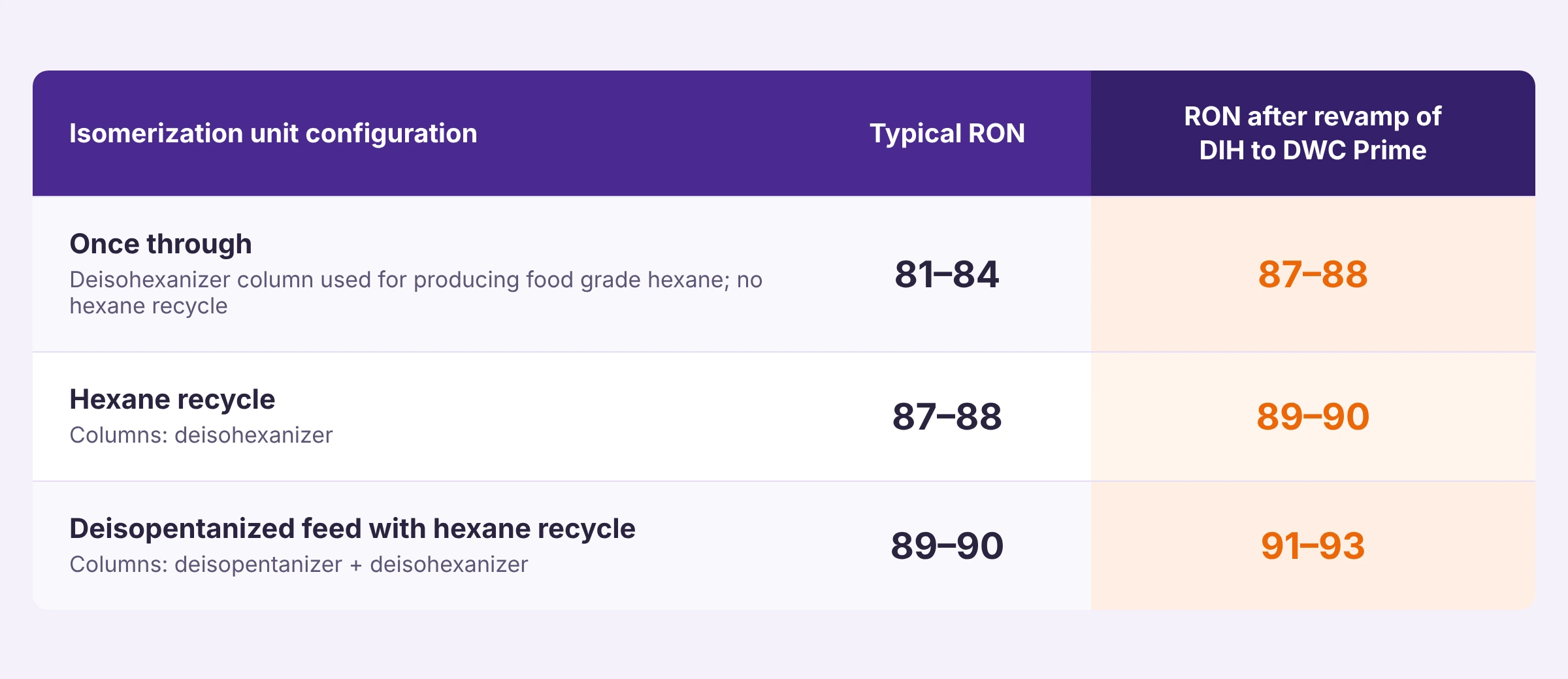
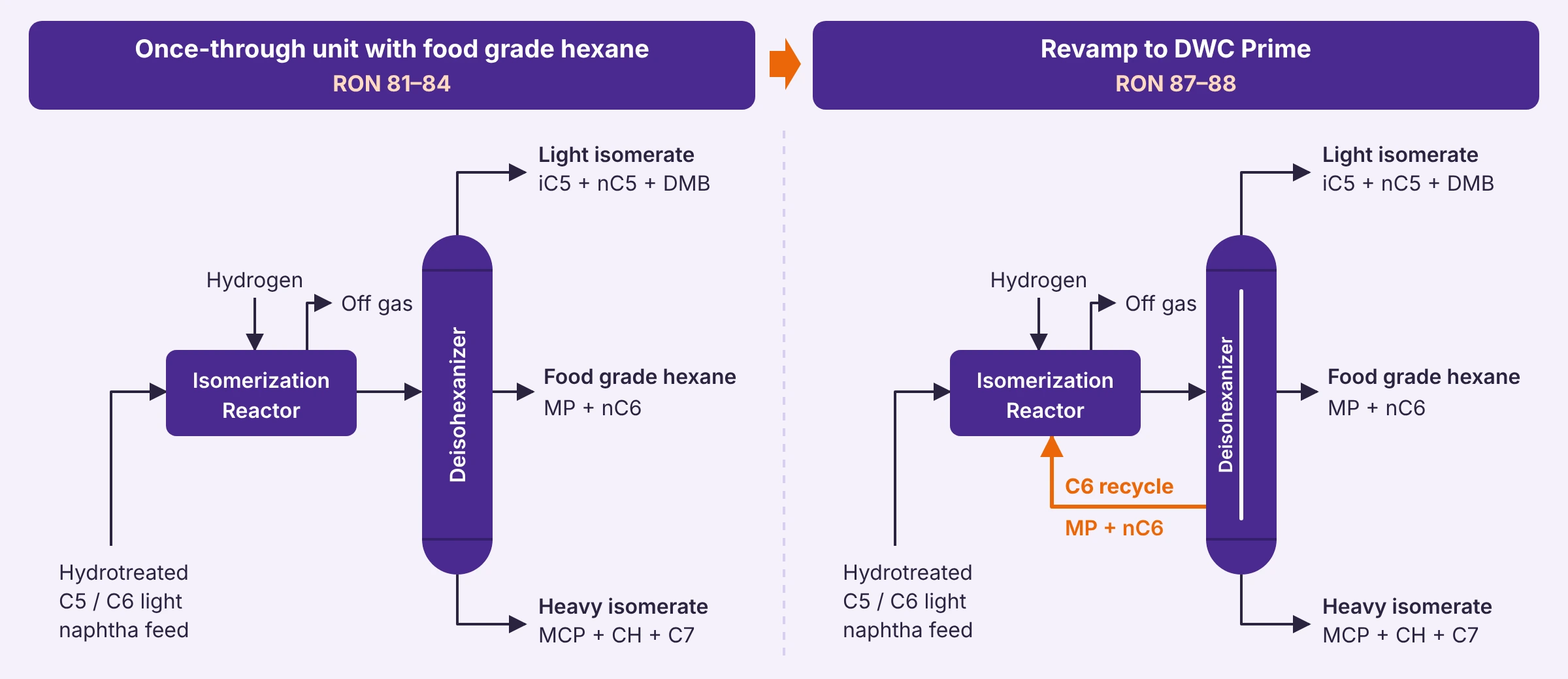
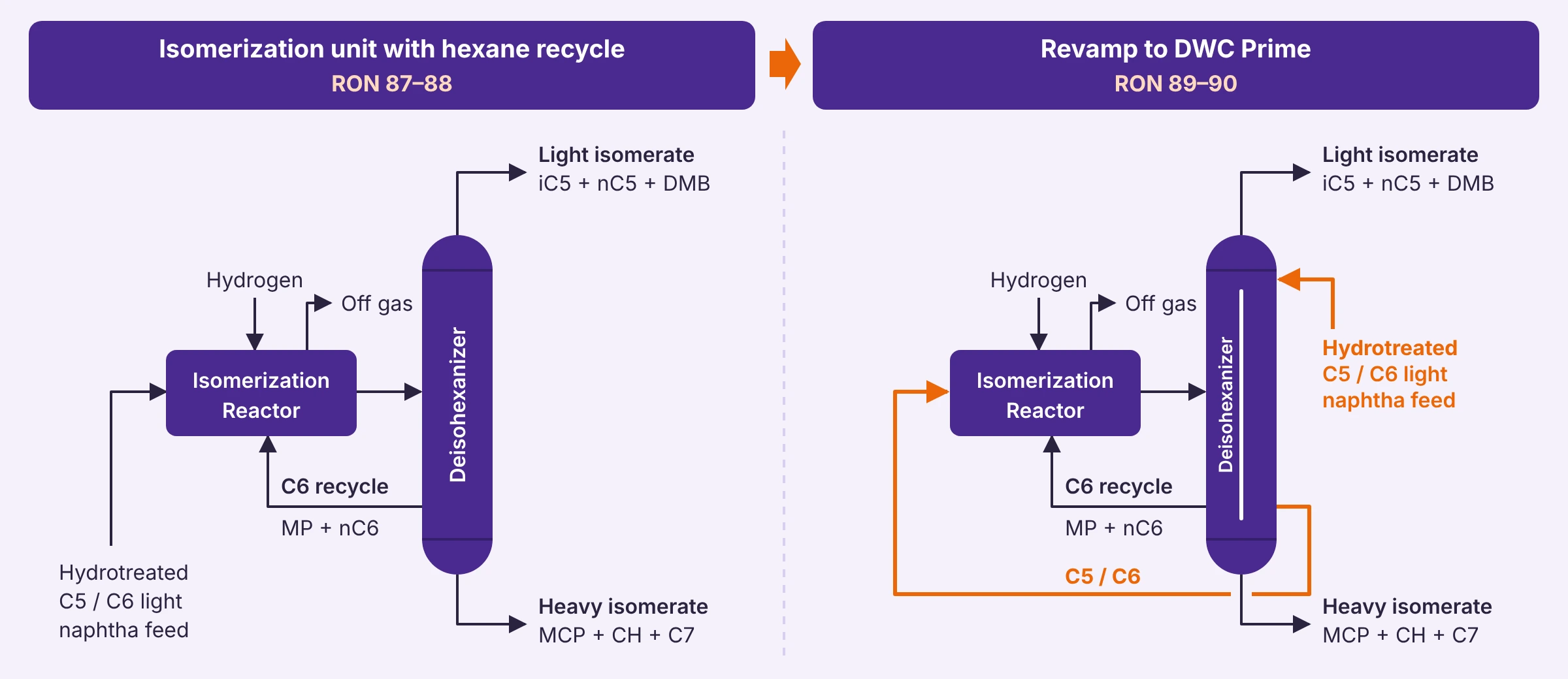
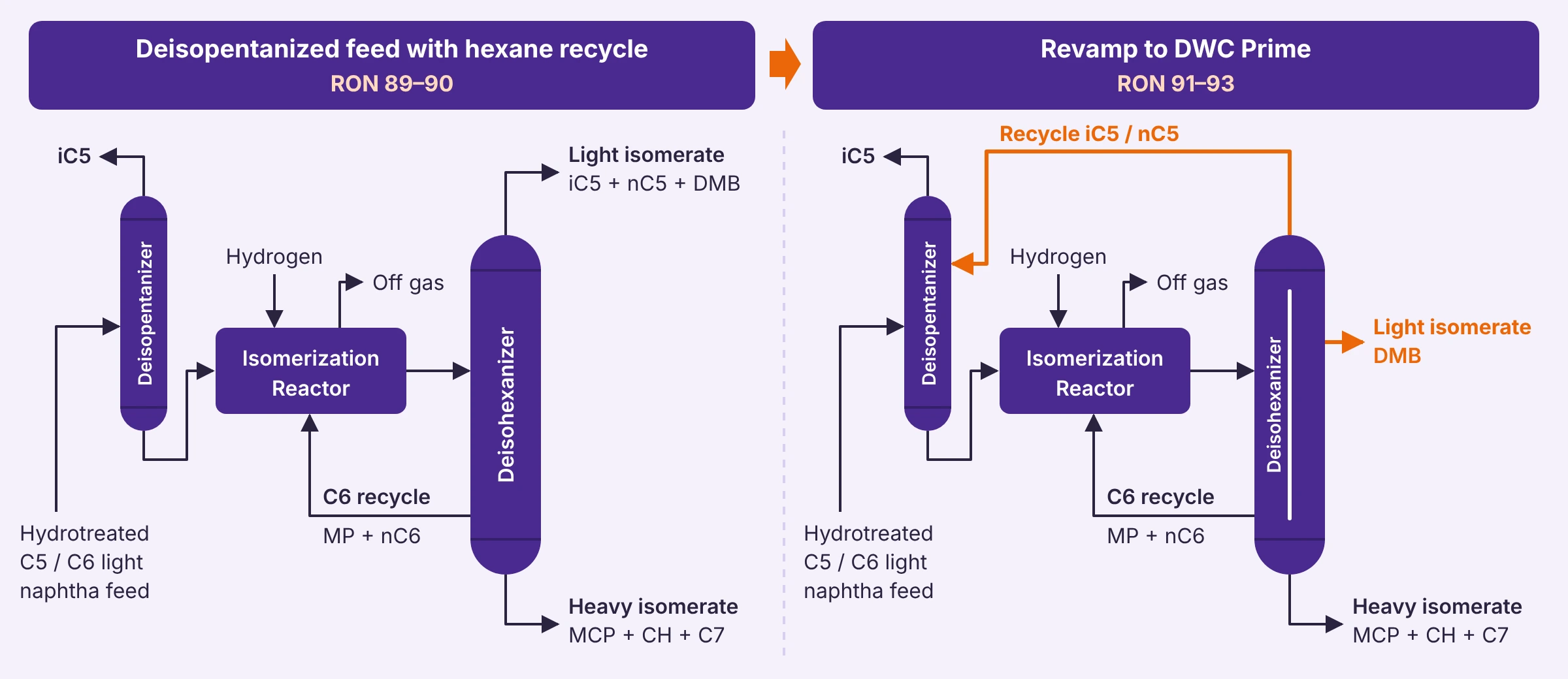
A unit with a deisohexanizer (DIH) column typically makes an isomerate of RON 87–88. Raising it conventionally means building a deisopentanizer (DIP) or a depentanizer (DP). DWC Prime retrofits inside the existing DIH shell and gives that one column the extra DIP or DP duty, so the same equipment gains 2 to 6 RON — reaching as high as RON 91–93 — depending on the starting configuration.
03Add a C6 product cut and unlock capacity
A conventional DIH column separates light and heavy isomerate and returns a side cut recycle to the isomerization reactor. Revamped to DWC Prime, that same column delivers a fourth cut of saleable C6 products — food grade hexane, polymer grade hexane, isohexane or special boiling point solvents — and lifts isomerization unit capacity by more than 20%.
Food grade hexane from an isomerization unit →
Maximizing margins in light naphtha isomerization →

Food grade hexane from an isomerization unit
Want to boost octane or capacity in your isomerization unit?
Talk to our engineers about opportunities to increase throughput and improve unit performance.